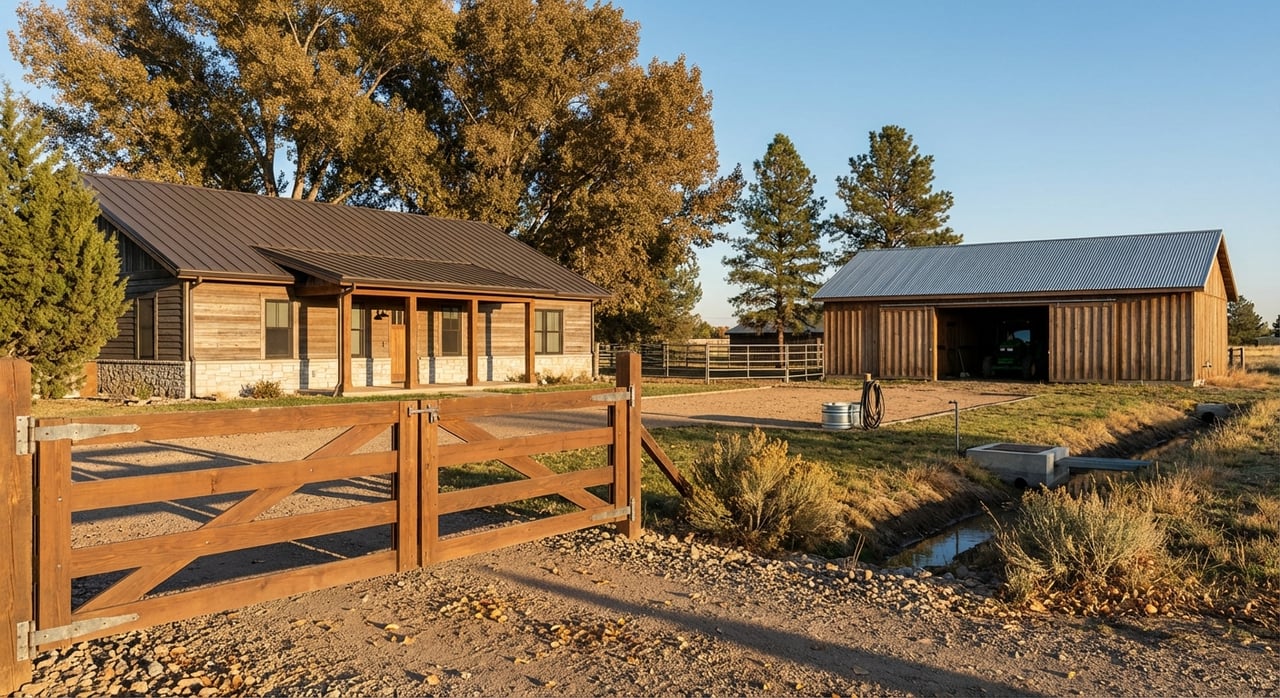
Picture morning light over the foothills, a few horses in the paddock, and enough room to breathe. That is the draw of small‑acreage living near Berthoud. If you are dreaming of a hobby farm or a place to spread out, you also need clear answers about wells, zoning, permits, and day‑to‑day upkeep. This guide breaks down what counts as “small acreage” here, how water rights shape your plans, and the practical steps to buy with confidence. Let’s dive in.
Where small acreage sits
Most true small‑acreage and hobby‑farm properties near Berthoud sit just outside town in unincorporated Larimer County. That matters because county zoning and development standards control minimum lot sizes, allowed uses, and setbacks. You will use the county’s Land Use Code to verify the rules for a specific parcel.
Inside town limits, parcels follow the Town of Berthoud’s Development Code and Future Land Use map. If you are unsure whether a property is inside town limits or in the county, start with the town’s Planning Department for jurisdiction and annexation questions.
Zoning and lot size basics
Larimer County’s Land Use Code for rural districts sets minimum lot areas that change based on utilities. In Rural Residential zones, the minimum lot size is larger when a property relies on a private well and septic. For example, the code lists 10 acres minimum in RR‑1 when on well/septic and 100,000 square feet (about 2.3 acres) in certain RR‑2 well/septic cases. Where public water and sewer are available, minimums can be smaller. Always confirm the exact standard in the county’s Land Use Code for the specific zoning district and utility setup on the parcel you are considering.
Keep two things straight as you compare properties: the zoning district on the county map and the parcel’s recorded size. Both matter. If you plan to add animals, a shop, or multiple outbuildings, check whether the zone allows those uses by right or if a special review is required.
Animals and outbuildings
Rural zones include setback and height standards for homes and accessory buildings. Barns, arenas, and large garages may trigger plan review and inspections. Before you design or place structures, review the setback table and accessory use rules in the county’s Land Use Code and confirm whether your use is allowed outright or needs special review.
Water rules your plan
Water is the single biggest technical and legal factor in small‑acreage living here. Your ability to water landscaping, keep livestock, grow hay, or expand a home all depend on the source and the rights tied to it.
Municipal vs. private water
Inside Berthoud limits, the town provides treated potable water and operates the wastewater system. If a property is served by town utilities, contact the town early for meter connections and service boundaries. Learn more on the town’s Water Utilities page.
Outside town, most properties rely on a private well and an on‑site wastewater system (septic). Some small acreages may also receive seasonal irrigation water through local ditches. Always confirm utilities and any special district service for each parcel during due diligence.
Exempt wells explained
Colorado allows “exempt” domestic and stock wells for small rural properties, but these wells come with limits. Typical guidance notes a small maximum pumping rate, often cited as 15 gallons per minute, and permitted uses are restricted by the well’s permit class. Exempt wells are junior to older, senior water rights. That means they can be curtailed if there is a valid senior call.
Your action plan:
- Get the well permit number and well log from the seller.
- Ask if the well is in a designated or over‑appropriated basin and whether an augmentation plan applies.
- Review records and contact the local division office through the state’s AskDWR portal for guidance.
Ditch shares and irrigation
Surface irrigation rights in local ditch companies are a separate property interest. They do not automatically transfer with a land sale unless the deed conveys them and the ditch company records the transfer. Deliveries are seasonal, and priority matters in dry years. For a clear picture of groundwater and surface systems in Colorado, review the Colorado Geological Survey’s Groundwater Atlas, then verify any ditch shares with the seller and the ditch company.
Septic and permits
If a property is on septic, request the approved on‑site wastewater treatment system (OWTS) design and inspection history. If you plan to build or expand, expect a straightforward process with clear steps: pre‑application questions with the county or town, septic design and permit, building permit submittal, and inspections. For parcels in town, meter and sewer connections run through the town’s utilities and Wastewater Management. For county parcels, use the Larimer County Land Use Code for setback, height, and accessory structure standards and coordinate septic approvals with the county.
Equestrian and 4‑H life
Berthoud sits in a county with a strong youth and equestrian culture. Larimer County 4‑H runs a robust Horse Project with clinics, levels, and county shows that many small‑acreage families use for skill‑building and community. You will also find private boarding and training facilities within a short drive, which helps if you board over winter or while you build out your own infrastructure.
Tradeoffs and costs
Small‑acreage living brings space, privacy, and views, plus room for animals and outbuildings. You are still close to Front Range job centers and outdoor recreation. The town’s Comprehensive Plan highlights where rural and agricultural character frames growth; see the Future Land Use map for context.
There are real constraints to plan for:
- Water supply: Exempt wells are convenient but junior to senior rights. Confirm the permit, historic yield, and any augmentation.
- Septic maintenance: Budget for periodic pumping, potential repair, and eventual replacement over a long ownership horizon.
- Access and upkeep: Driveway snow removal, gravel maintenance, fencing, and hay or bedding costs add up.
- Zoning and siting: Setbacks and height limits may shape where you can place barns, arenas, or shops. Some agricultural or commercial activities require special review.
When you nail the due diligence, the lifestyle can be outstanding: sunrise chores, space for projects, and easy runs into town for coffee or dinner.
Market and location snapshot
For context as you budget, Zillow’s local index shows a typical Berthoud home value in the low‑to‑mid six‑hundreds. In the latest snapshot we reviewed, the Berthoud ZHVI was about $601,000 (data through Jan 31, 2026). You can track the trend on Zillow’s Berthoud market page.
Berthoud sits along the I‑25 corridor with direct routes north to Loveland and Fort Collins and south to Longmont, Boulder, and Denver. Actual drive times vary by exact location and current projects. Check current CDOT updates during your search, especially if commuting is a priority.
Buyer checklist for small acreage
Use this quick list to move from dream to action:
- Confirm jurisdiction: Is the parcel inside Berthoud or in unincorporated Larimer County? Start with the town’s Planning Department if you are unsure.
- Zoning and animals: Identify the exact zoning district and read allowed uses, setbacks, and accessory rules in the county’s Land Use Code.
- Water: Ask for the well permit number and log, any augmentation plan, past yield tests, and water‑quality results. Verify details through AskDWR.
- Irrigation: Ask whether any ditch shares exist and whether they were conveyed in prior deeds. Confirm with the ditch company.
- Septic: Request the septic permit, approved OWTS design, and inspection history. For in‑town parcels, review Wastewater Management.
- Structures: Sketch a site plan early to test setbacks, driveway access, and utility tie‑ins before you order plans or materials.
- Community: Explore Larimer County’s 4‑H Horse Project for youth programs, clinics, and county events.
Ready to explore?
If small‑acreage living near Berthoud is on your horizon, you deserve a clear, step‑by‑step plan. Our team pairs local knowledge with practical, investment‑minded guidance so you can evaluate zoning, wells, irrigation, and build‑out costs before you write an offer. When you are ready, connect with Chelsey Franklin to start a focused search and build your due‑diligence checklist together.
FAQs
What counts as “small acreage” near Berthoud?
- Most hobby‑farm or horse‑friendly parcels sit in unincorporated Larimer County with rural residential zoning; minimum lot sizes depend on utilities and zoning in the county’s Land Use Code.
How do Colorado exempt wells affect small‑acreage plans?
- Exempt wells are small‑capacity, often cited at 15 gpm, with limited permitted uses and junior priority; always verify a property’s well permit and consult the state through AskDWR.
Are ditch shares automatically included when I buy land?
- No. Ditch company shares are separate property interests and transfer only if specifically conveyed and recognized by the ditch company’s records.
Who provides water and sewer service near Berthoud?
- Inside town, Berthoud provides treated water and wastewater service; outside town, most parcels use private wells and septic, so confirm utilities for each property early.
What is the current typical home value in Berthoud?
- Zillow’s ZHVI indicated about $601,000 as of Jan 31, 2026; check the Berthoud market page for the latest local trend.